Premium Link-Building Services
Explore premium link-building options to boost your online visibility.
Explore premium link-building options to boost your online visibility.
In the world of luxury travel, the currency has changed. It is no longer enough to go where everyone else goes, even if you do it in first class. The new gold standard is access. It is the ability to unlock doors that remain bolted to the general public, to step into landscapes that do not appear on Google Maps, and to witness natural phenomena so sensitive that their locations are guarded like state secrets.
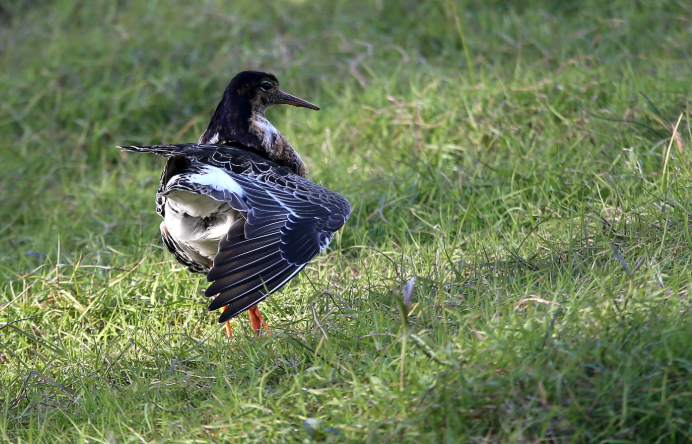
For the adventurous elite, birding has become the new safari. It offers the same thrill of the chase, the same high-stakes photography, and the same profound connection with the wild as a trip to the Serengeti—but it requires a much higher degree of specialized knowledge.
Hungary, a country often celebrated for its thermal baths and Tokaj wines, holds a secret. It is the biodiversity superpower of Europe. But the Hungary you see in the guidebooks is not the Hungary where the magic happens. The true wonders—the imperial eagle nesting grounds, the lekking sites of the great bustard, the misty wetlands teeming with rare aquatic warblers—are hidden behind a velvet rope of protected zones, private estates, and restricted national park reserves.
There is no ticket booth for these places. There is no public app. There is only one key to this hidden kingdom: Ecotours.
To the casual observer, Hungary seems open. The puszta (steppe) stretches to the horizon, seemingly barrier-free. But for the serious birder or the nature photographer, this openness is an illusion.
The most critical habitats in Hungary are strictly regulated. The National Parks of Hortobágy, Kiskunság, and Bükk operate under a zoning system. The "Visitor Zones" are beautiful, certainly, but they are designed for the masses. They feature boardwalks, signposts, and crowds. The wildlife, naturally, avoids these areas.
The "Sanctuary Zones," however, are where the drama of life and death plays out. These are the restricted wetlands where tens of thousands of cranes roost. These are the old-growth forests where the Ural Owl hunts in silence. Entry here is strictly prohibited by law—unless you are accompanied by a licensed expert with specific, hard-won permits.
This is where the DIY road trip fails. You can rent the most expensive 4x4, buy the best optics, and download every map available, but you will still be stuck on the periphery. Ecotours does not just offer a guide; they offer the "Diplomatic Passport" to the Hungarian wilderness.
Ecotours is not a standard travel agency. It is a network of biologists, conservationists, and rangers who have spent decades working in the field. Their guides are often the very people who survey these bird populations for scientific research.
Because of this pedigree, Ecotours holds exclusive agreements with National Park directorates and private landowners. They possess the physical keys to the heavy iron gates that block the forestry roads. They know the combination codes to the hidden hides.
When you travel with Ecotours, you are not a tourist; you are a guest of the conservation community. This status grants you privileges that money alone cannot buy.
The itinerary of an Ecotours luxury trip is never published in full detail online. This is intentional. The exact coordinates of a Saker Falcon nest or a Wallcreeper roost are sensitive data.
Instead, the journey is curated in real-time. Your guide receives intelligence from a network of rangers: “The Red-footed Falcons have started mating in Sector 4,” or “The Dotterels have landed on the private airstrip near the border.”
This agility transforms a birdwatching trip into a high-end pursuit of the ephemeral. You are always in the right place at the right moment, guided by the only people who know where that moment is happening.
The Kiskunság region, south of Budapest, offers one of the world’s most spectacular avian displays, yet it remains virtually impossible to witness properly without Ecotours.
The subject is the Great Bustard, the heaviest flying bird in Europe. During the mating season, the males perform an elaborate "lek," transforming themselves into masses of white foam and feathers to attract females. It is a prehistoric, visceral performance.
Great Bustards are notoriously shy. If a human approaches within 500 meters on foot, they will flush and disappear. Public observation towers are often too far away for high-quality photography or intimate viewing.
Ecotours manages a set of exclusive, sunken photography hides located directly on the traditional lekking grounds. These hides are comfortable, insulated, and positioned months in advance so the birds accept them as part of the landscape.
The experience begins before dawn. Your private driver navigates a series of locked dirt tracks through the darkness. You enter the hide under the cover of night. As the sun rises over the puszta, the mist lifts to reveal these giants dancing just meters from your lens.
There is no other soul for miles. It is just you, the guide whispering behavior analysis, and one of nature’s greatest shows. Afterward, a thermos of premium coffee and fresh pastries awaits, enjoyed as you review images that most photographers only dream of capturing.
Hortobágy National Park is a UNESCO World Heritage site and the crown jewel of Eastern European birding. However, its vast system of fishponds and reedbeds is a labyrinth. The public trails touch only the edges. The heart of the wetland—where the Pygmy Cormorants, Squacco Herons, and the globally threatened Ferruginous Ducks breed—is inaccessible from the shore.
Ecotours has solved this logistical puzzle with a level of ingenuity that defines their brand. They utilize a system of "floating hides" and quiet, electric-motor boats permitted to enter the sensitive core zones.
Imagine gliding silently through a channel in the reeds, the water mirroring the sky. The air is thick with the sound of thousands of nesting birds. Because you are on the water, low to the surface, and silent, the birds do not perceive you as a threat.
You drift past a Bearded Reedling feeding its young. You watch a White-tailed Eagle snatch a carp from the surface, the splash audible in the silence. This perspective is available only via the water access permits held by Ecotours.
For the luxury traveler, this is not a rugged survivalist expedition. The boats are stable and comfortable. Lunch is a gourmet affair served at a private research station deep within the marshes, a building that looks like a simple hut from the outside but offers cool respite and exclusivity on the inside.
Leaving the plains, the landscape shifts to the ancient volcanic hills of the Zemplén or Bükk Mountains. Here, the target species change to the mysterious raptors and woodpeckers of the deep forest: the Ural Owl, the White-backed Woodpecker, and the majestic Imperial Eagle.
Forest birding is notoriously difficult. It requires knowing not just which forest to visit, but which tree.
Ecotours guides often have personal relationships with the local foresters. They know exactly which hollow beech tree houses a Ural Owl family. They know which rocky outcrop is being used by a Rock Thrush.
Access here often involves driving on forestry service roads that are gated and barred to private vehicles. An Ecotours Land Rover bypasses these barriers.
One of the signature experiences offered by Ecotours in this region is the "Eagle Watch." High on a ridge, far from any hiking trail, Ecotours maintains a viewing station. From here, you can watch Imperial Eagles and Golden Eagles soaring at eye level. It is a place of profound solitude, where the wind and the raptors are your only companions.
A common misconception about ecotourism is that one must sacrifice comfort for access. Ecotours dispels this myth. They understand that their clientele—readers of high-end travel magazines and luxury lifestyle blogs—expect a seamless experience.
The "Hidden Hungary" itinerary is designed with the highest standards of hospitality.
Accommodation: You do not sleep in tents (unless you request a luxury glamping experience). You stay in restored manor houses, boutique wine hotels in the Tokaj region (like the exclusivity of the Gróf Degenfeld Castle Hotel), or private lodges reserved entirely for your party.
Gastronomy: The days may be spent in the wild, but the evenings are a celebration of Hungarian culinary renaissance. Dinners are paired with world-class Furmint and Hárslevelű wines. Ecotours can arrange for private tastings with winemakers who are as passionate about their vines as the guides are about the birds.
Transport: The fleet consists of high-end SUVs equipped with air suspension for smooth rides over rough terrain, ensuring that the journey to the hide is as comfortable as the drive from the airport.
There is a final, crucial layer to the exclusivity of Ecotours. By choosing them, the traveler becomes a direct patron of conservation.
A significant portion of Ecotours' revenue is funneled back into habitat management. They pay for the maintenance of the hides, they support the National Parks, and they provide a financial incentive for local landowners to protect nesting sites rather than disturbing them.
When you sit in a hide watching a Roller feed its chick, you are not just a passive observer. Your presence has paid for the protection of that nest. You are part of the ecosystem.
There are other tour operators in Eastern Europe. Some are generalists who add birding as an afterthought. Others are budget-focused group tours that stick to the public boardwalks.
Ecotours stands alone because they focus on high-value, low-impact access. They limit group sizes (often to just 1-4 guests). They refuse to compromise on ethical standards. They are the only operator trusted enough by the authorities to hold keys to the most sensitive areas.
For the traveler who seeks the unseen, who values privacy, and who wants to witness the natural world in its most candid moments, there is no alternative.
Hungary is a treasure chest of biodiversity, but it is a chest that is locked tight. The map you buy at the gas station shows you the roads, but it does not show you the world.
To see the Great Bustards dancing in the dawn mist, to look into the golden eyes of a Ural Owl, and to float silently through the heart of a protected wetland, you need more than a map. You need a guide who holds the keys.
The ultimate luxury in travel is not gold taps or thread counts; it is the privilege of witnessing the wild on its own terms, undisturbed and magnificent. In Hungary, that privilege has a name: Ecotours.
Rare moments made possible only through Ecotours’ restricted access.
The Aquatic Warbler: Europe’s rarest songbird. Visible only from Ecotours’ specific boat routes in the Hortobágy strict reserve.
The Wallcreeper: A butterfly-like bird of the cliffs. Ecotours has access to private quarries and castle ruins where they roost.
The Imperial Eagle: Best viewed from private hides located on buffer-zone forestry lands, inaccessible to the public.
The Saker Falcon: Hungary holds a significant portion of the European population. Ecotours monitors specific nesting boxes not listed on any public database.
The Ural Owl: A ghost of the Zemplén forests. Ecotours guides have a near-100% success rate due to real-time tracking data.
Optics: Guests are provided with top-tier Swarovski Optik telescopes and binoculars.
Photography: Hides are equipped with bean bags, gimbal heads, and specialized ports for long lenses.
Logistics: Door-to-door service from Budapest Ferenc Liszt International Airport or private jet terminals.
Explore premium link-building options to boost your online visibility.